
Entering the betting world without fully understanding the real meaning of the numbers you see on your screen is the quickest way to wipe out your bankroll.
Many people get fascinated by empty concepts like “high odds” or “low odds“, treating them as if they were absolute indicators of feasibility or safety.
But the reality is quite different: in professional betting, odds are not a fixed dogma, but a fluctuating price that reflects a probability.
In simple terms, odds in football betting are just the numerical translation of a percentage probability estimated by a bookmaker, from which a fixed profit percentage called “margin” is subtracted.
If you want to get serious, you must stop seeing odds as a sports prediction and start considering them for what they really are: a market price.
In one of our first articles, we analyzed whether making money with sports betting is still possible today and how bookmakers behave when dealing with winning players.
But in order to make a profit in the long run, understanding how to interpret odds is the very first concept you need to digest.
Index
What are odds and what do they really mean (the math behind the number)
To fully understand football betting odds, we must strip that little number you see on the screen of any purely sporting meaning and reduce it to its true nature: mathematics.
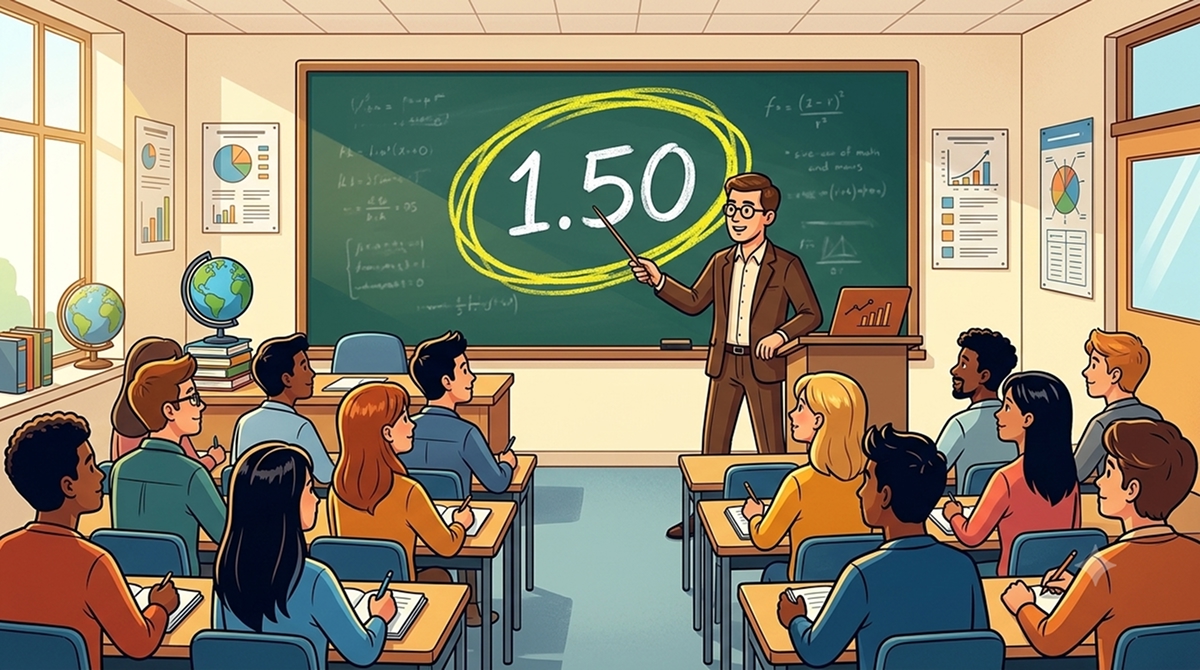
The classic question asked by those taking their first steps in this world is: what do betting odds of 1.50 mean?
To explain this properly, we must start with the formula that converts decimal odds into the implied probability percentage that the bookmaker assigns to that event:
- Implied probability % = (1 / Odds) x 100
If we apply this formula to the practical example of odds at 1.50, the calculation is immediate:
- Implied probability % = (1 / 1.50) x 100 = 66.6%
This simply means that, according to the bookmaker’s calculations, the event in question has a 66.6% probability of occurring (or about a 2 in 3 chance).
Here are two other quick examples to understand how the relationship between football odds and probability varies:
- Odds 2.00: represents a 50% implied probability (1 / 2.00 x 100 = 50%)
- Odds 4.00: represents a 25% implied probability (1 / 4.00 x 100 = 25%)
If you limit yourself to searching for pre-packaged odds and predictions on the web, hoping that very low odds are “safe” by definition, you are falling into the first cognitive trap of betting.
Those odds are only telling you that the bookmaker estimates a very high probability, but they do not guarantee any certainty.
And of course, the reverse reasoning also applies: there is no such thing as high or low odds, only higher or lower probability.
The bookmaker's great deception: how odds are calculated and what the margin is
Bookmakers do not use their resources to “guess” who will win the next big match.
Their only real goal is to balance the incoming cash flows on all possible outcomes of a match, securing a mathematical profit known as the margin (or overround).
To understand how football betting odds are calculated, let’s look at the elementary example of a coin toss.
Will it land on heads or tails?
Both outcomes have exactly a 50% real probability.
In a perfect theoretical market without intermediaries, the fair odds for both outcomes should be exactly 2.00.
However, to guarantee a profit, the bookmaker will offer you heads at 1.90 and tails at 1.90.
If we do an odds analysis by calculating the total implied probability of these two odds, you will notice something strange:
- Total probability = (1 / 1.90 x 100) + (1 / 1.90 x 100) = 52.6% + 52.6% = 105.2%
That extra 5.2% above 100% is the margin.
In football betting, this invisible tax usually fluctuates between 5% and 10% depending on market liquidity.
Then there are various scenarios with different numbers, but that is not the intention of this article.
The skill of a professional bettor does not lie in guessing who will win the big match of the week.
Across 1,000 identical odds, the probability estimated by the bookmaker’s statistics will be incredibly close to reality.
The real skill consists in understanding where the bookmaker’s algorithm has inserted an unbalanced margin, finding the mathematical cracks in their pricing model.

Correct score odds in football: why are they so high?
The correct score market is one of the most beloved by amateur bettors dreaming of a big win with just a few euros, but it also represents one of the most penalizing markets from a mathematical standpoint.
If you are wondering what the most frequent correct score odds are, the answer is linked to the historical statistics of football.
Results like 1-1, 1-0, or 2-1 historically have lower odds (usually between 5.00 and 8.00) simply because they occur with a much higher frequency.
Conversely, complex scores like 3-2 or 4-2 can be offered at odds exceeding 30.00 or 50.00.
The average correct score odds are so high because the real probability of the match ending with that exact scoreline is extremely low.
The random variables within a match (an early red card, an own goal, a penalty awarded in the ninetieth minute) are too numerous and impossible to predict with surgical precision.
If you are looking for answers on how to predict the correct score in football, the truth is that you do not guess it.
Anyone trying to do so on a purely intuitive basis is just gambling. Mathematically, the margin applied by bookmakers on correct score markets is significantly higher than that of standard markets like 1X2 or Under/Over.
It is, by the numbers, the fastest and most scientific way to have your betting account drained.
The professional breakthrough: beating the margin with expected value (+EV)
In professional betting, there are no such concepts as “safe predictions” or “already won matches“.
The only sustainable way to generate long-term profits is called value betting.
But how do you understand if the odds of a bet are convenient?
Odds are not convenient because they are low or because you think a team is clearly superior. They are convenient exclusively when the odds offered on the market are higher than the fair odds calculated based on the actual probability of the event occurring.
Let’s assume that, thanks to an accurate analysis of the odds, you managed to determine that a team has a 60% real probability of winning a match. Its fair odds (without margin) should be 1.66. If the bookmaker, due to anomalous flows or incorrect evaluations, offers that team at odds of 1.80, you are facing a bet with positive expected value (+EV).
The formula to calculate the expected value of odds is as follows:
- EV = (Real probability x Offered odds) – 1
In our specific example:
- EV = (0.60 x 1.80) – 1 = 1.08 – 1 = +0.08 (which means an 8% expected mathematical return in the long run)
Many bettors try to follow the path of odds comparison, passing them off as safe (the so-called surebets) to exploit temporary misalignments between bookmakers.
However, this is a highly unsustainable path over time: bookmakers track and limit accounts that exploit these inefficiencies in record time.
To measure your performance and understand if you are working correctly with value odds, it is essential to use a standardized approach.
We do this by calculating returns with a flat stake of 1 unit for each single transaction.
Any other dynamic or progressive money management method is often used by untransparent tipsters just to inflate and artificially manipulate their historical statistics.
If you want to delve deeper into the mathematics that turn betting into a structured investment, read our definitive guide to value betting and expected value (EV).

Live football odds vs pre-match: how the time variable changes
Operating on live football odds – meaning in real-time during the match – introduces a completely different set of dynamics and variables compared to pre-match analysis.
The substantial difference is driven by time management.
But how do live odds change during a match?
The bookmaker’s algorithm recalculates probabilities second by second based on the clock, the current score, real-time statistics, and the flow of play on the pitch.
In this scenario, the phenomenon known as time decay manifests itself.
If a match is tied (for example, 0-0), the odds for a “Draw” will constantly drop as the minutes tick away, while the odds for either team winning will rise accordingly to compensate for the less time remaining to score.
The movement of odds in real-time markets constantly generates huge market inefficiencies. Bookmakers’ algorithms must react in fractions of a second to chaotic and complex events, leaving excellent opportunities on the table for those who can read live football odds quickly and with a cool head.
Be careful, because I do not want you to misunderstand.
When I speak of huge market inefficiencies and excellent opportunities, I mean that you can have positive expected values of around 10% even on a single transaction.
Let’s forget about catching odds of 3.00 with a real value of 1.50.
That is science fiction and fluff you find scattered around from cheap tipsters. Bookmakers are not stupid, and if you think they are, you are dead wrong.
Operating in this direction requires a strict action plan and total emotional control. Without rigid management rules, live operations risk turning into overtrading driven by the adrenaline of the moment. Even and especially in major markets like Serie A, Premier League, La Liga, Ligue 1, Bundesliga, etc.
Working on real-time odds requires a completely different strategy compared to pre-match. We have broken down our operational preference in this article on live vs pre-match football betting: how we prefer to play to actually make money.
Odds do not exist, only probabilities do
Ultimately, the most important epiphany you can have in this industry is accepting the fundamental reality: static and physical odds do not exist.
There is only a distorted mirror (warped by the bookmaker’s margin) of a percentage probability in constant motion.
If odds are nothing more than a fluctuating price representing a dynamic probability, then the professional bettor’s activity is transformed, to all intents and purposes, into odds trading.
Those operating at this level do not just bet on their favorite team; they buy and sell odds, exploiting market misalignments before or during the sporting event, just as a trader would in financial markets.
To make this professional leap, you do not need to read the morning sports press or try to guess the players’ mood.
What you need is to analyze data, studying historical databases on football and any other sport to identify statistical patterns and recurring inefficiencies that bookmakers’ algorithms fail to correct in time.
Sports trading is not a game based on intuition; it is the mathematical result of those who stop betting with their gut.
If you decide to see this world as a pure financial investment, you must be a data analyst and not a football fan. The sooner you understand that odds only represent a probability to be exploited in your favor in the long run, the sooner you will start making real profits.
To operate like a true sports trader and not a casual bettor, the first step is not looking for magic software, but a total restructuring of your mental approach.
We discussed this in depth here: investing in sports betting: an immediate change of mindset is needed.