

This is the first article of my new blog TheBettorDiary, the space where I talk about betting with no frills, no illusions, and no beating around the bush.
I decided to start from here, facing head-on the question that, deep down, everyone – and surely you too – has asked themselves at least once in their life: is making money with sports betting still possible today?
Personally, I don’t bet to pass the time: I do it to win, to make a monetary profit.
Therefore, giving the answer to this fundamental question is the foundation on which everything else rests.
Small spoiler: yes, making money with sports betting is still possible, but not in the way many imagine or how it could be done up to 10 years ago.
Today it is no longer a matter of “lucky bet slips”, but of pure mathematics, risk management, and an analytical approach.
Index
Can you make money with betting? The harsh mathematical truth
The reality is that making money with sports betting has become exponentially more complex in recent years.
The bookmakers have increasingly sophisticated weapons to defend their margins: algorithms, predictive software, and account restriction systems.
It is no coincidence that those who lose are always welcome, while those who demonstrate they can generate a steady profit are quickly isolated.
However, if I had to define the most powerful weapon available to the house to destroy your chances of profit, it would have a very specific name: the overround.
What is the overround and why this unwelcome protagonist of the betting world is your worst enemy
The overround is the percentage advantage that every bookmaker applies to their odds to ensure a mathematical profit margin, regardless of the outcome of the event.
It’s not magic or witchcraft: it’s applied finance.
Let’s look at a practical example based on a classic football match with 1X2 odds:
- 1 -> 2.20
- X -> 3.50
- 2 -> 2.80
To calculate the implied probability estimated by the bookmaker in an odd, the formula is simple: (1 / Odds) x 100.
- 1 -> (1 / 2.20) x 100 = 45.45%
- X -> (1 / 3.50) x 100 = 28.57%
- 2 -> (1 / 2.80) x 100 = 35.71%
In nature, the total probability of a match ending in 1, X, or 2 is mathematically 100%. However, if we sum the probabilities defined by the bookmaker’s odds, we get:
45.45% + 28.57% + 35.71% = 109.93%
If we subtract 100% of the real probability, a discrepancy of 9.93% remains.
This difference is the overround.
It means that if you bet on 100 identical matches at those odds, mathematics will force you to lose in the long run, because the bookmaker is paying you less for the event than it is actually worth.
This is why, in the long run, the house always wins (and you probably lose).
Because the real probability of sign 1 in this case is not actually 45.45%, but lower (and therefore the associated odds should be higher), and if you play 100 matches identical to these odds, to break even you would need a positive outcome about 45 times, but statistically you will win about 40 times, and this difference in the long run will make you lose money.
This is even clearer in the classic Under/Over market (equivalent to a coin toss with a 50% probability on each side, where the fair odds would be 2.00).
On real sportsbooks you will find instead:
- Under 2.5 -> 1.90
- Over 2.5 -> 1.90
If you bet €1 on the Under and €1 on the Over, you spend €2 in total to collect, in either case, only €1.90. Those 10 cents of difference are the house’s guaranteed mathematical profit.
In recent years, this problem has even grown: if once the average overround hovered below 5%, today Italian bookmakers apply percentages ranging between 6% and 12%, sometimes reaching extreme peaks of 20% (I have actually seen this).
Furthermore, the overround is not evenly distributed among the various available outcomes.
Going back to the previous example, it is not split in half on the Under outcome and half on the Over outcome. Most likely it will be higher on the Over outcome because it is the market most frequently played by bettors; here every bookmaker makes their own calculations and it is not possible to have this data with precision.
Translated into simple words: for every bet, the bookie always has a guaranteed profit margin.
For the bettor, this is a huge disadvantage, which many so-called tipsters tend to underestimate, driven by the illusion of being better than the bookmakers.
Wanting to prove at all costs that they are “good” is the primary reason for the downfall of tipsters who, in their heads, believe they are making money with bet slips, but by not thinking with an analytical mind, they are destined for failure.
The second is haste, but this is a topic I will address on another occasion.

The myth of "safe money with betting" and "how to never lose"
On the web, miraculous promises constantly circulate about alleged infallible methods to get safe money with betting or imaginative guides on how to never lose a bet slip.
It is fundamental to be clear: in betting, just like in traditional financial markets, zero risk does not exist.
Anyone who promises you mathematically certain and risk-free profits is knowingly lying to you.
Very often, these alleged “gurus” profit by selling worthless services or earning through affiliations on your very own losses, exploiting bookmaker registration links.
The only real way to protect your money consists of the rigorous study of the markets, the acceptance of statistical variance, and the diversification of your strategies.
Risk cannot be erased, it can only be managed through data.
Market change: goodbye to the opportunities of the past
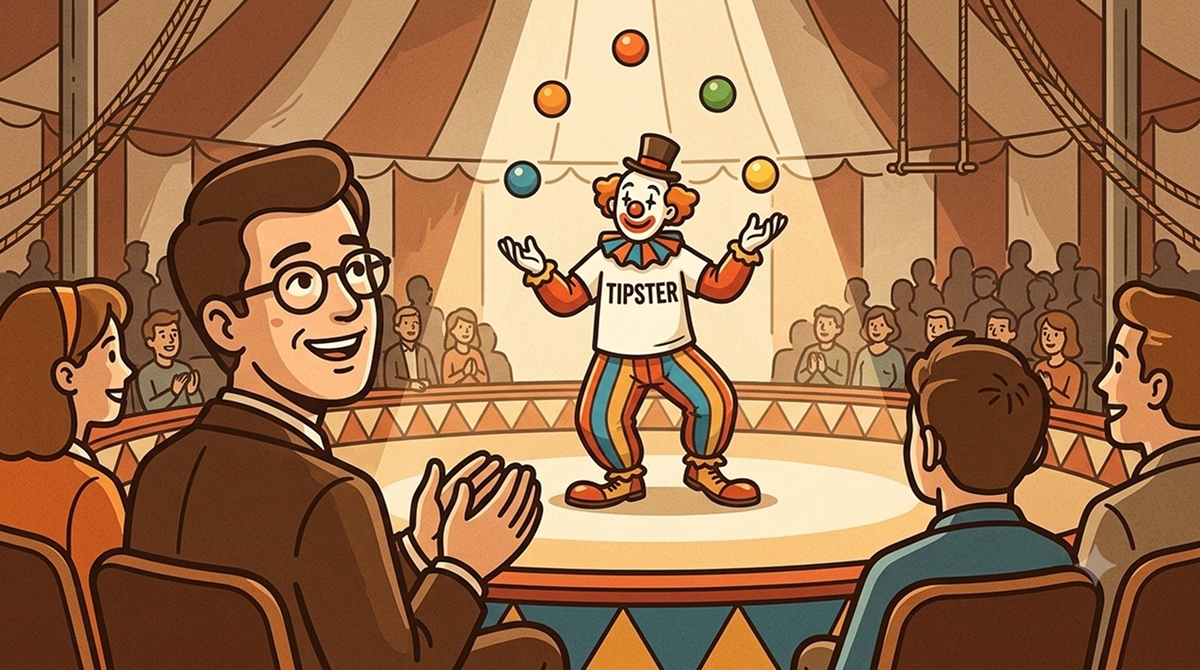
Many old-school tipsters are convinced they can beat the house based only on their personal ability.
To you tipsters, I have bad news: you are not better than the bookmakers at setting the odds.
They have tools infinitely superior to yours and, in the long run, the overround covers their minimal evaluation errors anyway.
Also because you no longer find “wrong odds” like you used to.
Once, every bookmaker had their own human oddsmakers and the differences in evaluation among the various brands allowed for identifying wide value margins.
It was enough to compare the odds lists to find macroscopic inconsistencies.
Today the situation has changed radically.
Odds across the various sites are increasingly identical and standardized. Why?
- Disappearance of human oddsmakers: Today, odds are generated in real-time by complex mathematical software and artificial intelligence systems.
- Unified external suppliers: The vast majority of bookmakers no longer have an in-house “odds department”. They buy the betting lists from a very few global external companies specialized in data analysis, limit themselves to deciding what overround percentage to apply, and publish the odds on their portal. Since almost all of them draw from the exact same source, the odds turn out to be uniform across the entire money betting market.

So can you really make a lot of money and live off betting?
Having reached this point in the analysis, it would almost seem like standing in front of the gates of Dante Alighieri’s hell: “Abandon all hope, ye who enter here”.
With constantly increasing overrounds, identical odds at every bookie, and markets controlled by algorithms, the idea of living off sports betting seems like an impossible challenge.
In reality, it is not like that, and that is exactly why I founded this blog: to prove that it can be done, it is possible, but the solution is not where the masses are looking for it.
From gambling to investment: the mandatory mindset shift
If you want to seriously approach this sector to generate real and steady profits over time, you must take a mandatory step: shift from a gambling mindset to a financial investment one.
If your goal is to make sure that betting turns into a fully-fledged financial investment, you absolutely cannot do without a radical change in approach.
Read our guide on Sports betting as an investment: a change of mindset is needed to understand how a professional in the sector thinks.

Sports betting as a financial asset? The choice is now yours
Making money with betting is still possible in 2026, and it will still be in 2027, 2028 and in the years to come, but it requires an approach completely different from the traditional one.
Forget instinctive plays, “miraculous systems”, and the hunt for the big win: you must view betting as an investment, with an investor mindset.
The fundamental ingredients that I have identified in my operational journey to dismantle the house’s advantages are:
- Thinking outside the box: Do not let yourself be conditioned by the limiting beliefs of losing tipsters. Open your mind. Most of the popular beliefs I read around are not supported by any statistically significant numbers.
- Totally eliminating the emotional aspect: The only thing that matters is pure numbers.
- Automating every process: It connects to the previous point and allows you to save a lot of valuable time.
- Using advanced tools and strategies: You don’t go to war with a slingshot; in our case, the “weapons” are represented by mathematics, numbers, and deep analysis.
- Having patience: Haste is one of the most subtle enemies in this market.
The idea of making quick and easy money with betting is a commercial lie specifically created to make you lose.
The future of winning betting is in numbers, analysis, and patience.
If you are ready to change your perspective and see betting as a real investment, keep following TheBettorDiary.